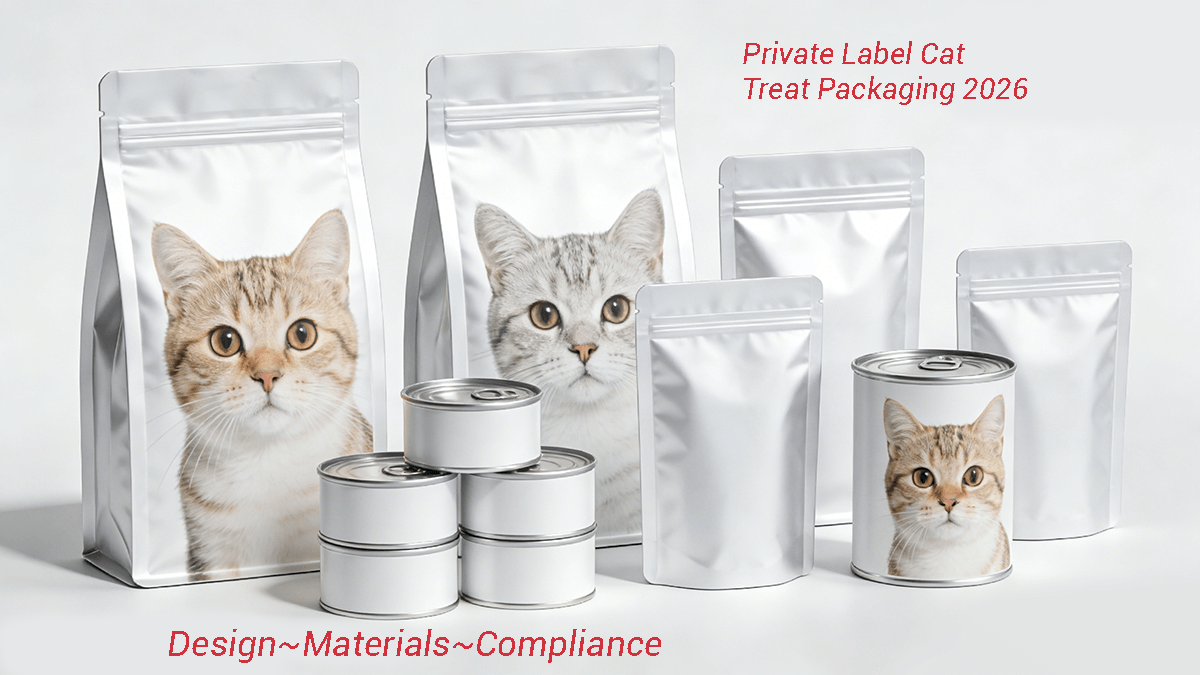
Private label cat treat packaging plays a critical role in brand positioning, product safety, retail performance, and regulatory compliance. For B2B buyers, distributors, and pet brands entering the U.S., EU, and global markets, the right packaging strategy directly affects shelf appeal, food safety, and customs clearance success.
1. What Is Private Label Cat Treat Packaging?
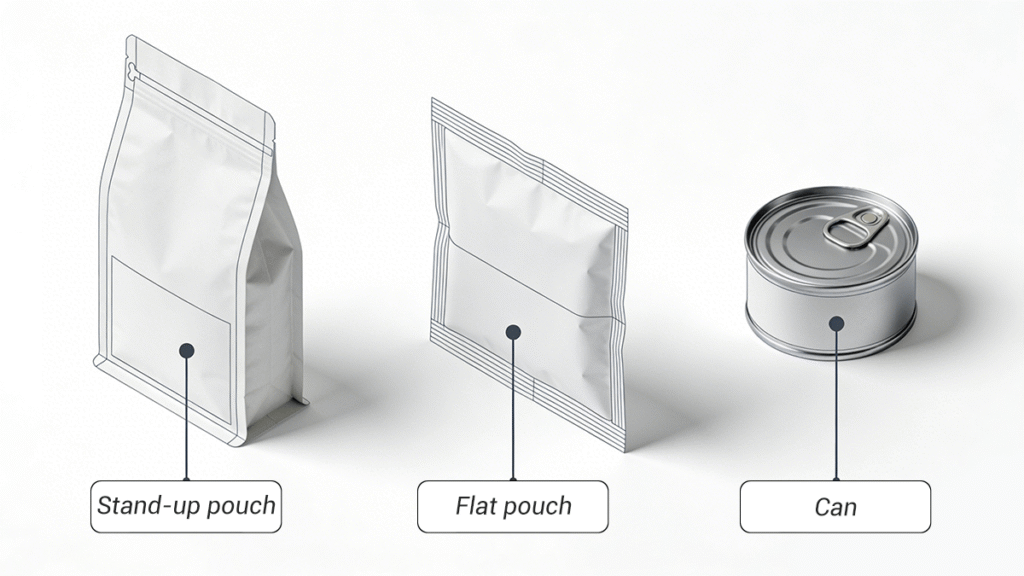
Private label cat treat packaging refers to customized, brand-owned packaging produced by an OEM manufacturer for cat treats such as freeze-dried snacks, soft chews, jerky, and dental treats. It includes packaging structure, high-barrier food-grade materials, custom printing, branding, and regulatory-compliant labeling.
2. Eye-Catching Cat Treat Packaging Design Strategy
Effective packaging must balance visual appeal, clarity, emotional connection, and compliance transparency. Popular formats include stand-up pouches (resealable, high-barrier), flat pouches for value SKUs, and rigid PET/HDPE jars for premium lines.
3. Food Safe Cat Treat Packaging: Materials & Barrier Requirements
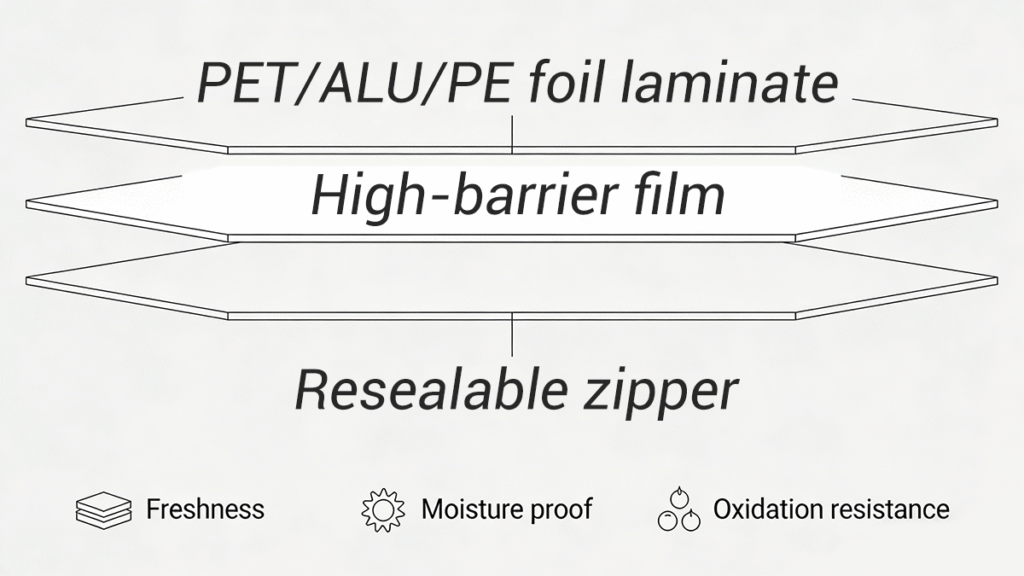
Food safety is non-negotiable. Proper packaging prevents oxidation, moisture damage, and contamination. Recommended structures include PET/PE laminations, PET/ALU/PE foil laminates for long shelf life, BOPA puncture-resistant laminations, and BOPP labels for rigid containers.
4. FDA & AAFCO Cat Treat Packaging Compliance (U.S.)
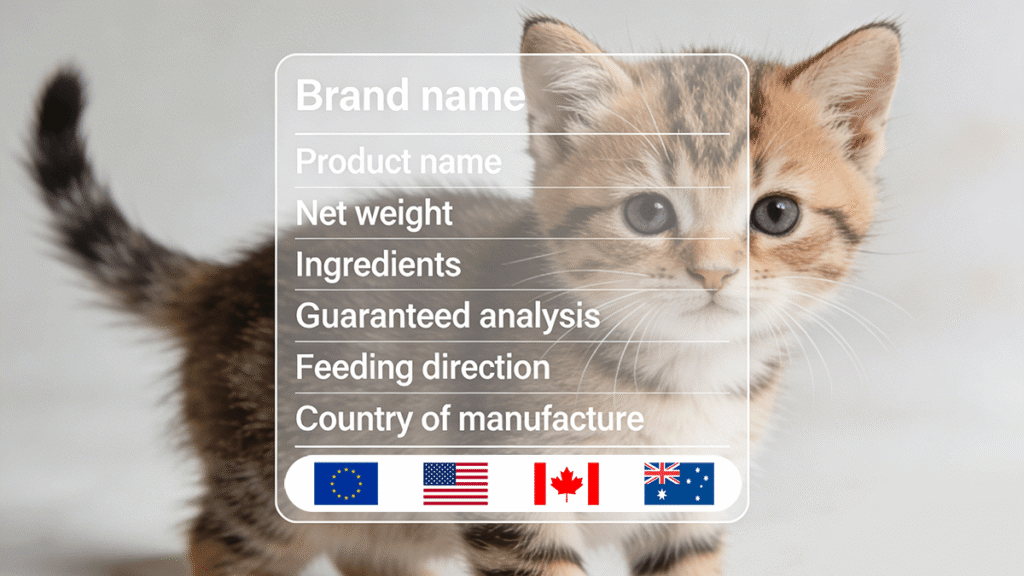
U.S. packaging must comply with FDA regulations and follow AAFCO labeling guidelines. Mandatory elements include brand name, product identity, net quantity, guaranteed analysis, ingredient list (descending weight), feeding directions, manufacturer statement, and lot/date codes.
5. Global Compliance Considerations
EU requires multi-language labeling and recyclable materials transparency. Canada requires bilingual labeling (English & French). Australia enforces strict import and biosecurity documentation.
6. Personalized Cat Treat Packaging for Private Label Brands
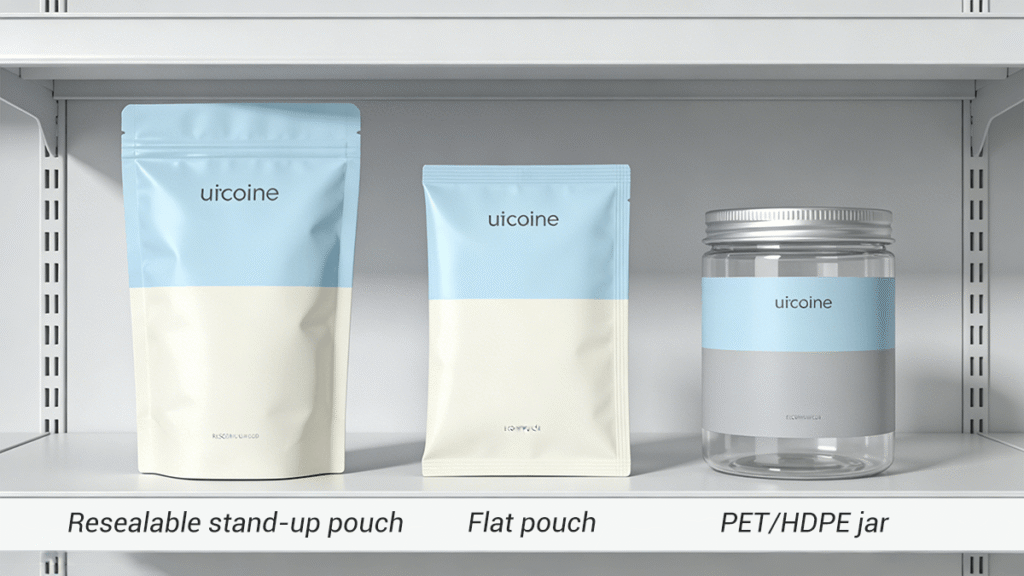
Customization options include brand logo integration, flexible sizes, multi-flavor SKUs, eco-friendly materials, and marketplace-ready labeling. Low MOQ digital printing supports startups, while large-scale production supports established brands.
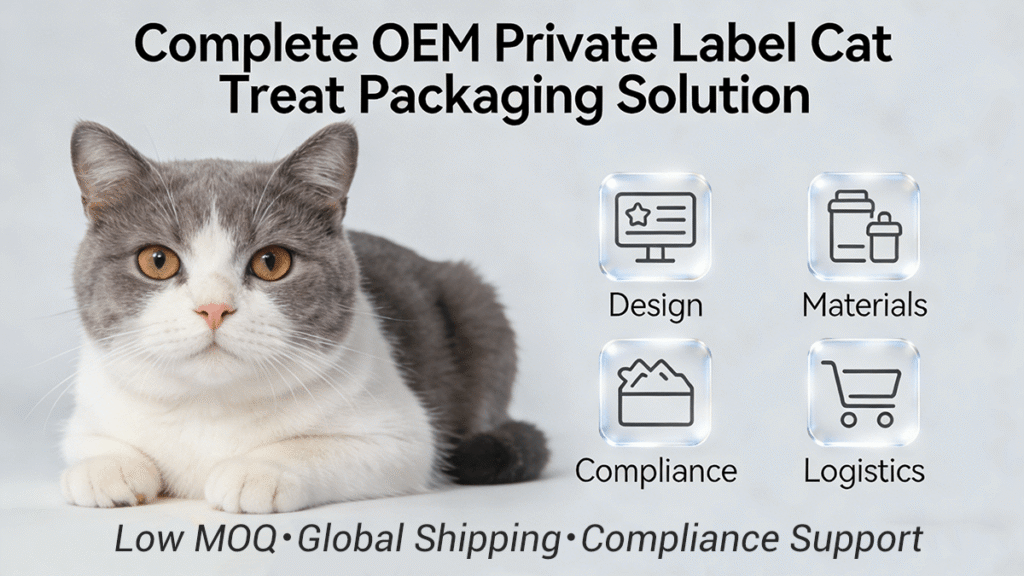
7. Complete OEM Packaging Solutions
A professional OEM partner should provide FSMA, HACCP, and cGMP compliance support, label review before printing, material testing, artwork proofing, scalable production, and global logistics coordination.
8. FAQ (Optimized for AI Overview)
Q1: What is the best packaging for freeze-dried cat treats?
Stand-up pouches with high-barrier laminate and resealable zipper.
Q2: Does cat treat packaging need FDA approval?
FDA does not pre-approve packaging, but labeling must comply with regulations.
Q3: What materials keep cat treats fresh longest?
Foil laminate (PET/ALU/PE) provides the highest barrier protection.
Q4: Can I order low MOQ custom cat treat packaging?
Yes, digital printing enables smaller production runs.
Conclusion
High-quality private label cat treat packaging combines strategic design, food safety, regulatory compliance, brand personalization, and cost optimization. Partnering with an experienced OEM reduces risk and accelerates market launch.
Author Profile (EEAT Strengthening Section)
Written by a pet food packaging specialist with 10+ years of OEM experience and expertise in FDA, AAFCO, and EU labeling regulations. Supported over 200 global pet brands in launching compliant and successful private label products.