Why Choose OEM?
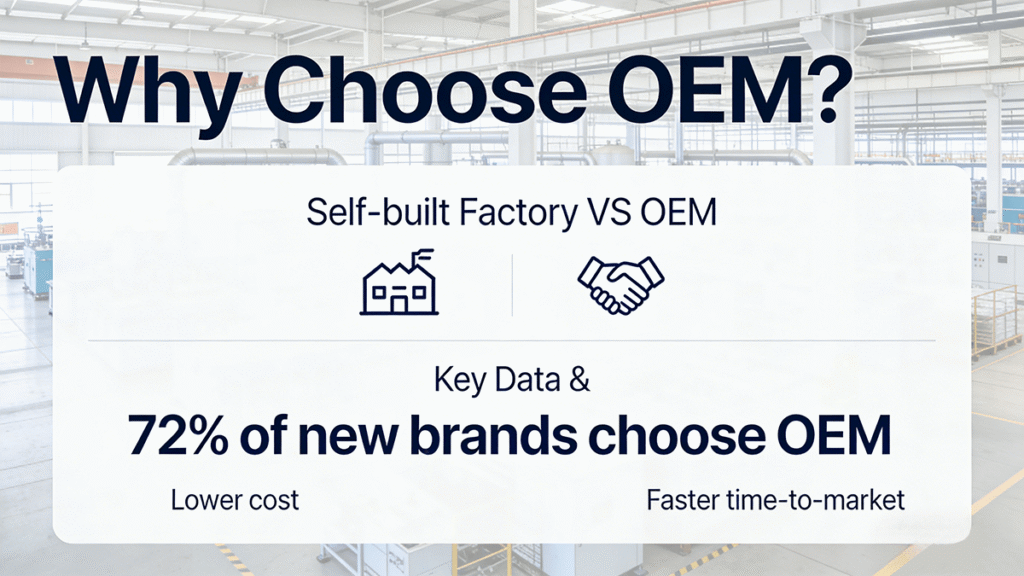
New pet treat brands face high costs, long R&D cycles and compliance challenges in building in-house production lines. OEM leverages factories’ mature capabilities to launch products quickly at low cost—72% of new pet brands opt for OEM (vs 18% building factories), with successful cases hitting 100,000+ monthly sales in 6 months via OEM and brand operation focus.
Pre-Cooperation Preparation
1. Clarify Core Needs (5 Dimensions)
Compile into a PRD/one-page PPT and send to 3-5 factories for quotes:
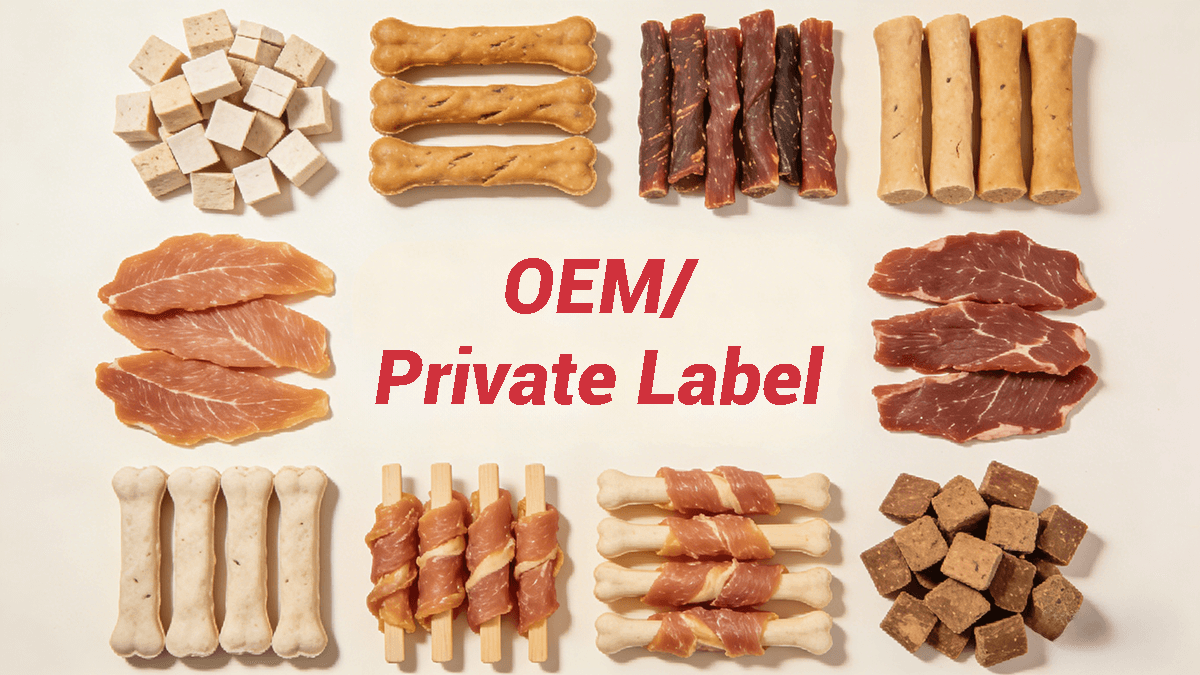
- Product positioning: Category (freeze-dried, dental chews, etc.) & function (joint, gastrointestinal health, etc.)
- Audience & pricing: Mid-high end (fresh, additive-free)/cost-effective/cross-border
- Form & specs: Shape, formula, pack weight, flavor count
- Sales region: Domestic/export (lock in corresponding labeling/test standards)
- Budget & MOQ: Plan stock, accept delivery time; prioritize 300-500kg small trial orders
2. Strict Factory Screening
Reject intermediaries; verify 3 core points:
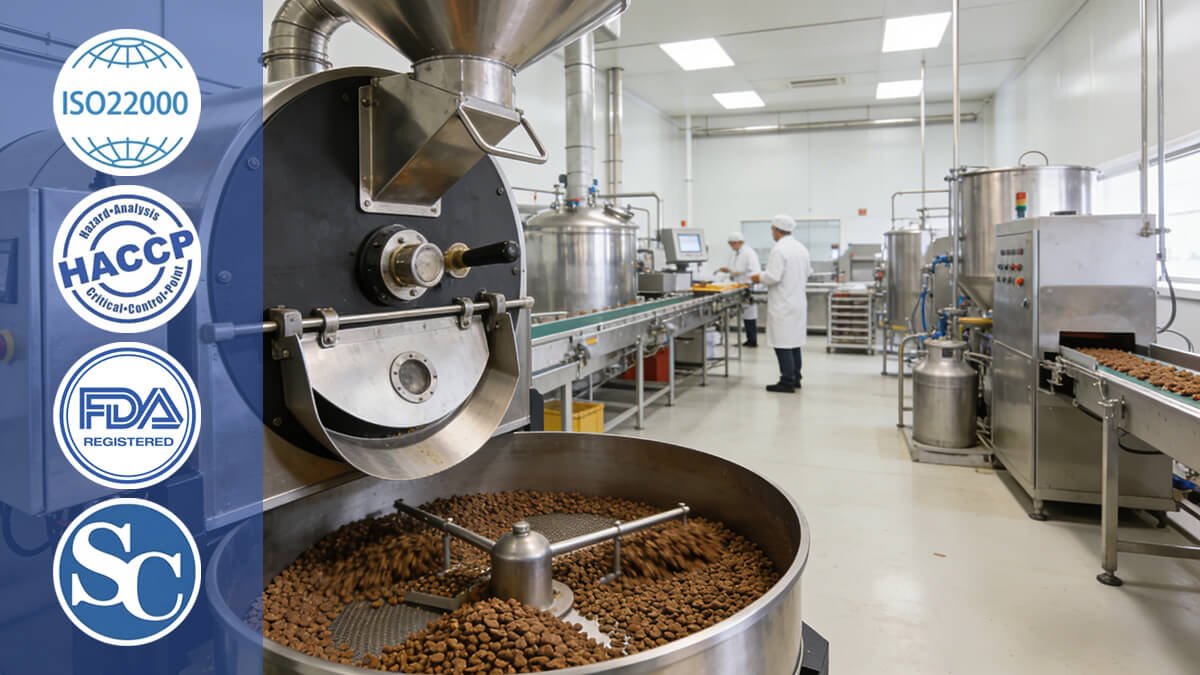
- Qualifications: Business License, Pet Food Production License (SC for China), ISO22000/HACCP, sterilization equipment, raw material traceability & third-party test reports
- Compatibility: Owned factory, full-time pet nutritionists/R&D team (ODM support), flexible MOQ for small/mixed orders
- Transparency: Full QC system (incoming/production/finished product inspection), detailed pricing (no hidden fees for mold/R&D/sampling)
8-Step OEM Cooperation Process
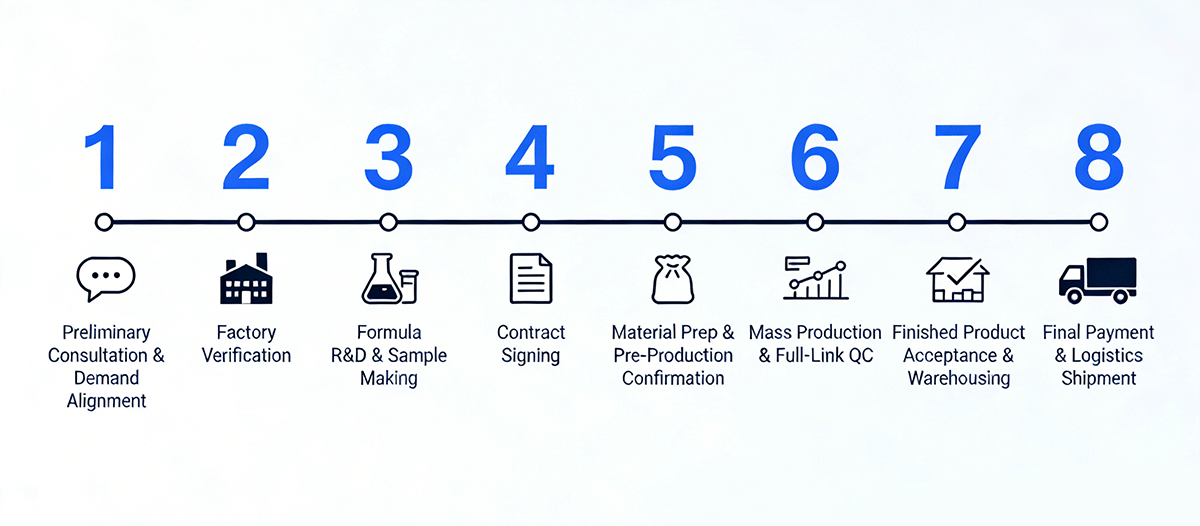
1. Preliminary Consultation & Demand Alignment
Brand submits demand list and inquires about factory’s capabilities, pricing, sampling policies; factory provides cases/samples, assesses feasibility. All core consensuses in writing (email/official letter).
2. Factory Verification
On-site inspection (4 core areas: clean workshop, raw material warehouse, QC lab, finished product warehouse) preferred; for remote, request HD videos + sealed qualification scans (verify via official platforms). Ensure compliance with pet food GMP.
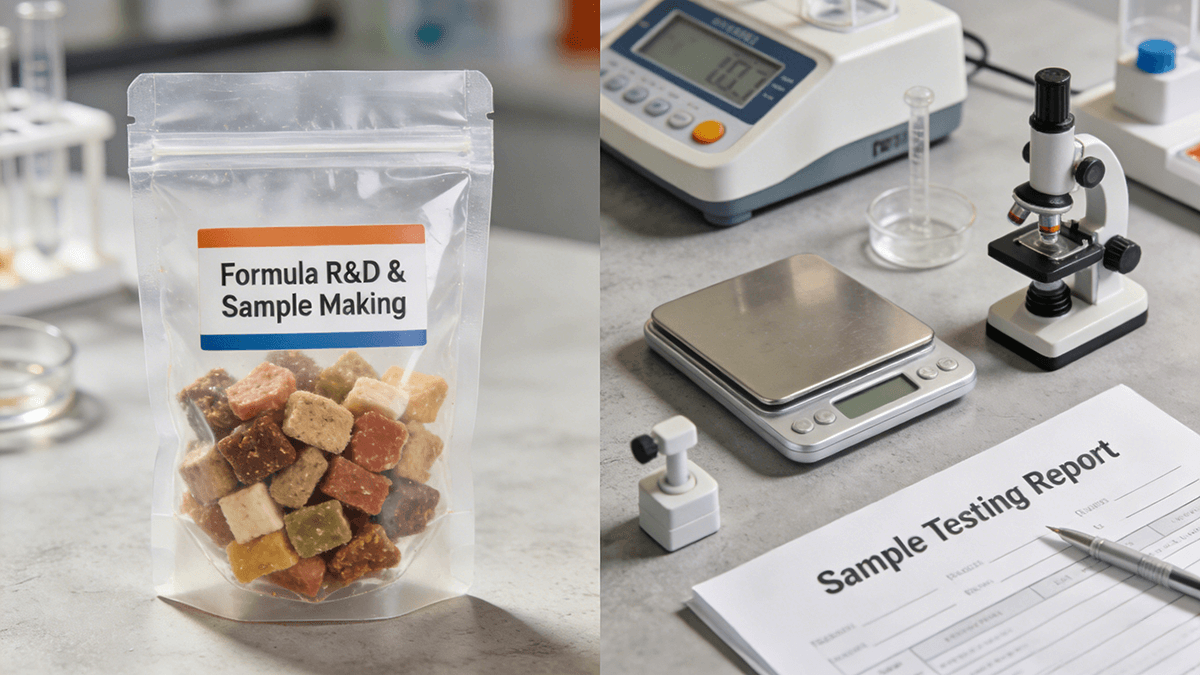
3. Formula R&D & Sample Making
- 2 formula models: Standard (no R&D fee, fast delivery) / Customized (tens of thousands RMB fee, 15-20 workdays, differentiated competitiveness)
- Sampling process (5-10 workdays): Parameter locking → trial production → testing & feedback → optimization → final confirmation
- Jointly seal samples (1 copy each) as the sole mass production acceptance standard
4. Contract Signing
Convert all verbal commitments to written clauses; clarify key points:
- Product specs (nutritional indicators, packaging) & sealed sample as benchmark
- Raw material standards (grade, traceability, no low-quality materials)
- MOQ, detailed pricing, payment (30% advance +70% final after acceptance)
- Delivery cycle, delay compensation, force majeure
- QC/after-sales (unqualified batch handling), IP/confidentiality, supporting service termsQuantify vague clauses; seek legal advice if needed.
5. Material Prep & Pre-Production Confirmation
- Packaging: Brand-prepared (per factory specs, arrive 3-5 days early) / factory-procured (confirm design, 3%-5% loss rate agreed)
- Raw materials: Factory conducts double inspection; brand requests batch/test info
- Sign pre-production confirmation form (no modifications without special circumstances); confirm production schedule for real-time tracking
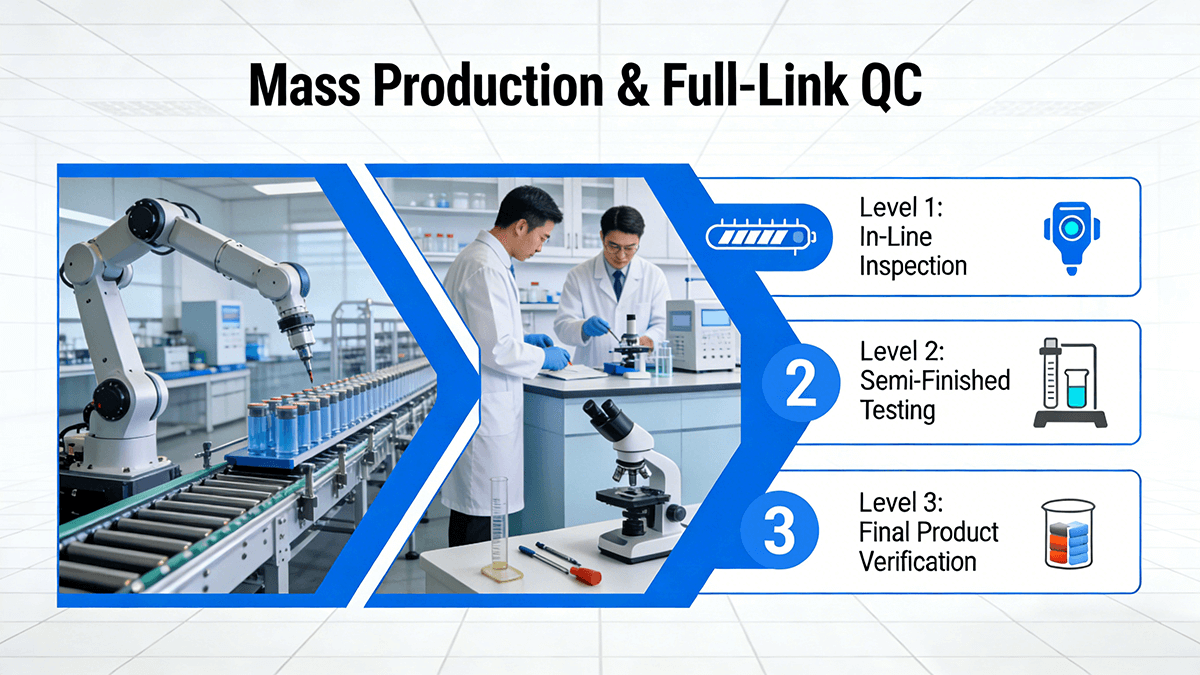
6. Mass Production & Full-Link QC
Factory controls key process indicators (e.g., freeze-drying at -30℃~-50℃); QC personnel conduct hourly patrols. 3-level testing: incoming raw material → in-production semi-finished product → finished product (nutrients, microbes, heavy metals; test report per batch). Factory notifies brand of issues within 24h and provides solutions; reserve samples for testing.
7. Finished Product Acceptance & Warehousing
- 2-step acceptance: Verify factory test report → physical sampling (3%-5% per batch, check consistency with sealed samples, packaging/printing)
- Unqualified: Photo evidence + negotiate rework/replacement/refund; Qualified: Sign confirmation letter
- Factory implements preservation (nitrogen-filled for freeze-dried, oxygen absorbers for dried), sealing test; warehouse zoning with batch/date labels; retain samples for ≥6 months
8. Final Payment & Logistics Shipment
Brand pays balance after receiving acceptance notice + test reports; factory arranges shipment:
- Logistics: Cold chain (0-4℃) for freeze-dried/fresh treats; normal temp (moisture/pressure-proof) for dried/dental chews
- Cross-border: Factory assists with customs clearance (terms agreed in contract)
- Factory provides logistics number + full traceability/test documents; brand stores products in cool/dry place and implements batch outbound management
- Clarify shelf-life quality liability (production vs storage/transport issues)
Pitfalls & Compliance Tips
5 Common Pitfalls & Solutions
- Price-focused, ignore QC: Reject quotes 30% below industry average; verify factory QC
- No written agreements: All consensuses in contract; retain sealed samples/confirmations
- Non-compliant packaging: Review per target market regulations with factory/compliance consultants
- Blind trust in factory test reports: Mandatory third-party re-inspection for the first batch
- Inadequate cash flow: Prepare full-cycle budget; control trial/mass production scale
Core Global Compliance Requirements
- China: GB/T 31216/GB 13078; salmonella undetectable, mold ≤50CFU/g; mandatory labeling, no medical/false claims
- US: FDA registration, Feed GMP; zero salmonella tolerance; English labels
- EU: CE certification, EC 183/2005; raw material ratio labeling; third-party test reports
- Japan: MHLW inspection, Positive List System; strict pesticide/additive control; Japanese labelsTip: Establish compliance files; monitor regulatory updates and optimize products timely.
OEM Capability Self-Evaluation
Score 4 dimensions (1-5 points); total <12 = optimize first, score <3 = targeted improvement:Demand clarity | Budget adequacy | Compliance awareness | Market readiness
Summary & Long-Term Cooperation
4 Core Principles
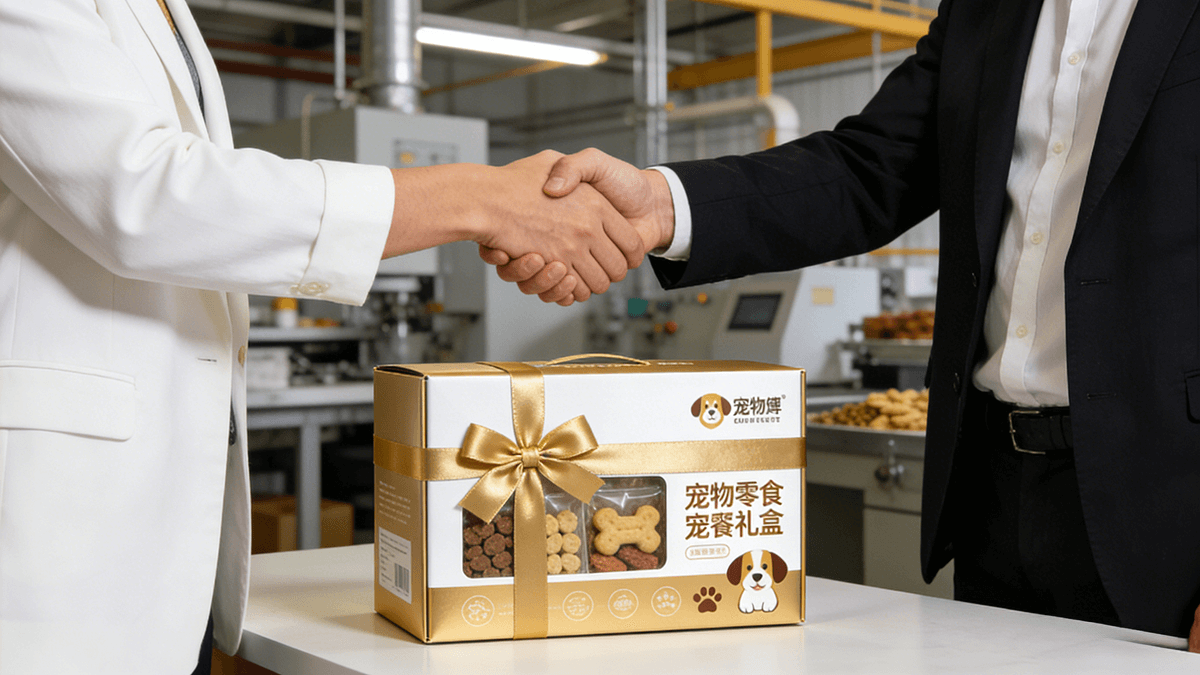
Clear demand (premise) → Factory qualification verification (foundation) → Contract protection (key) → QC priority (core)OEM lets brands bypass production barriers and focus on brand operation/customer service/market expansion.
Long-Term Strategies
- Fixed communication mechanism; optimize formulas/labels based on market feedback/regulatory changes
- Follow industry trends (2026: natural additive-free/functional treats) and co-develop new products with factories
- Standardized launch process: Clarify needs → Screen 3+ factories → Consultation → Verification → Trial production → Third-party re-inspection → Mass production → Market iterationNew brands gain a foothold by focusing on niche groups, precise differentiation and strict OEM quality control.
Key Appendices
- Factory Essential Qualifications: 8 certificates (license, ISO22000/HACCP, traceability, export certifications, etc.)
- Sample Sealing Template: Printable, with brand/factory info, sample specs and acceptance standard confirmation
- Global Compliance Summary: One-click reference for China/US/EU/Japan core requirements